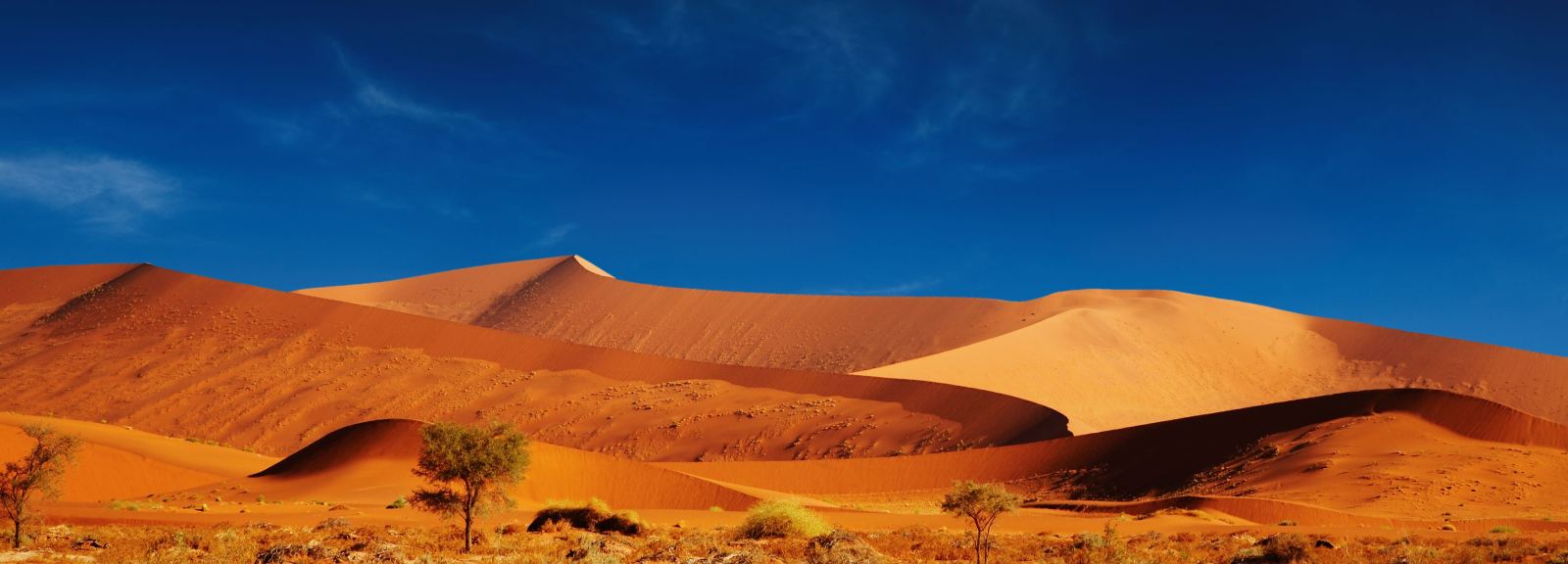
Red dunes with camel thorn trees under clouds

Pictures

Sossusvlei in pictures

Twelve frames from the Namib, ordered by the time of day they were taken.

Photographs of the Namib start to look alike very quickly: red sand, blue sky, an edge between the two. What makes the difference is the clock. Between the first light and the moment the sun clears the crest there are maybe twenty minutes. Those twenty minutes produce the pictures you recognise again later.

After that it turns bright, hard and flat. The sand loses its colour, the shadows go, and the camera shows a desert that could be any desert. Which is why nearly everything here was taken in the first or the last hour of the day.
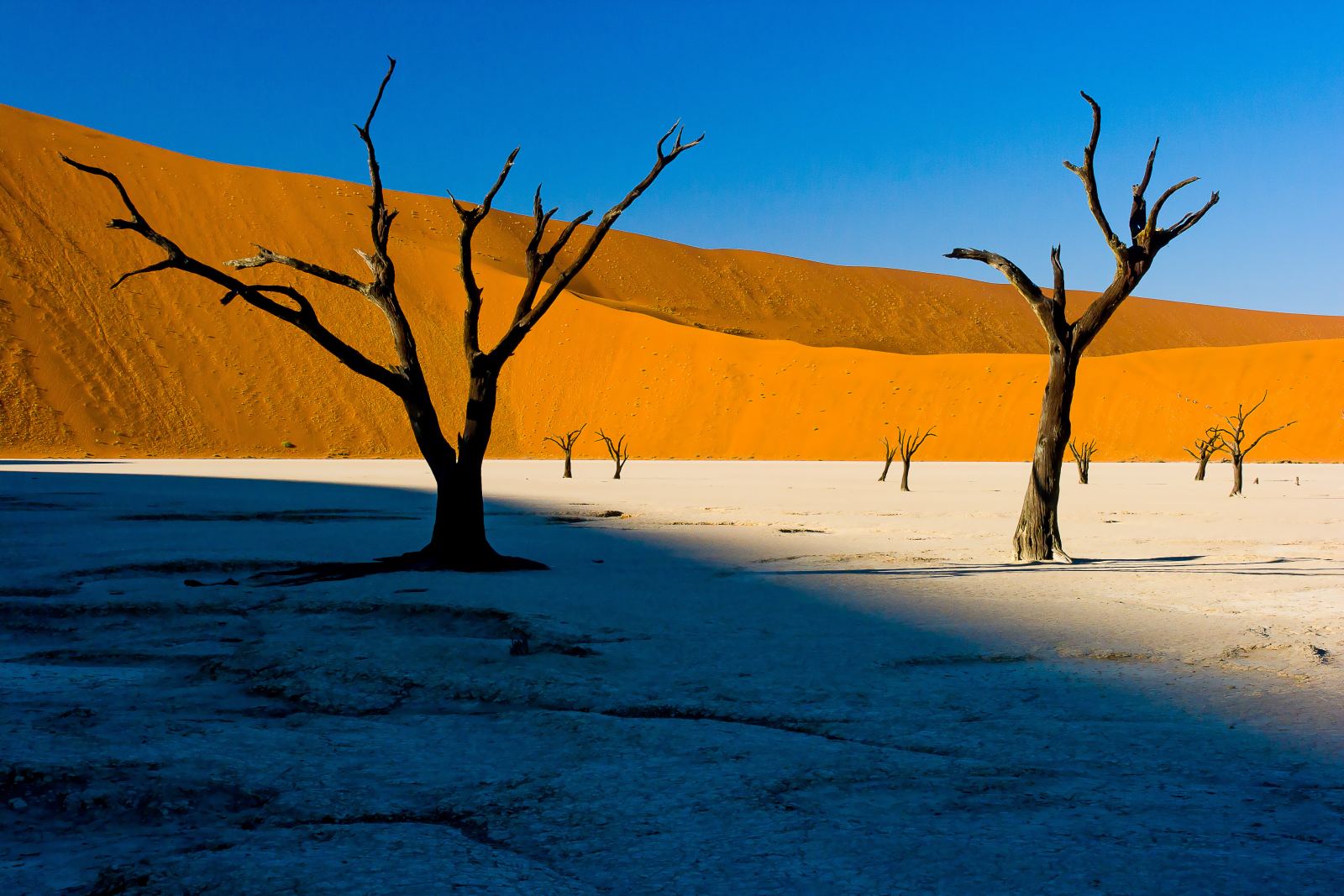
Two dead camel thorn trees in front of an orange dune wall
The best known view in Namibia, and still almost empty if you get there early enough.
A crescent dune with a sharp shadow edge
The line between light and shadow is the route up. From below it looks shorter than it is.
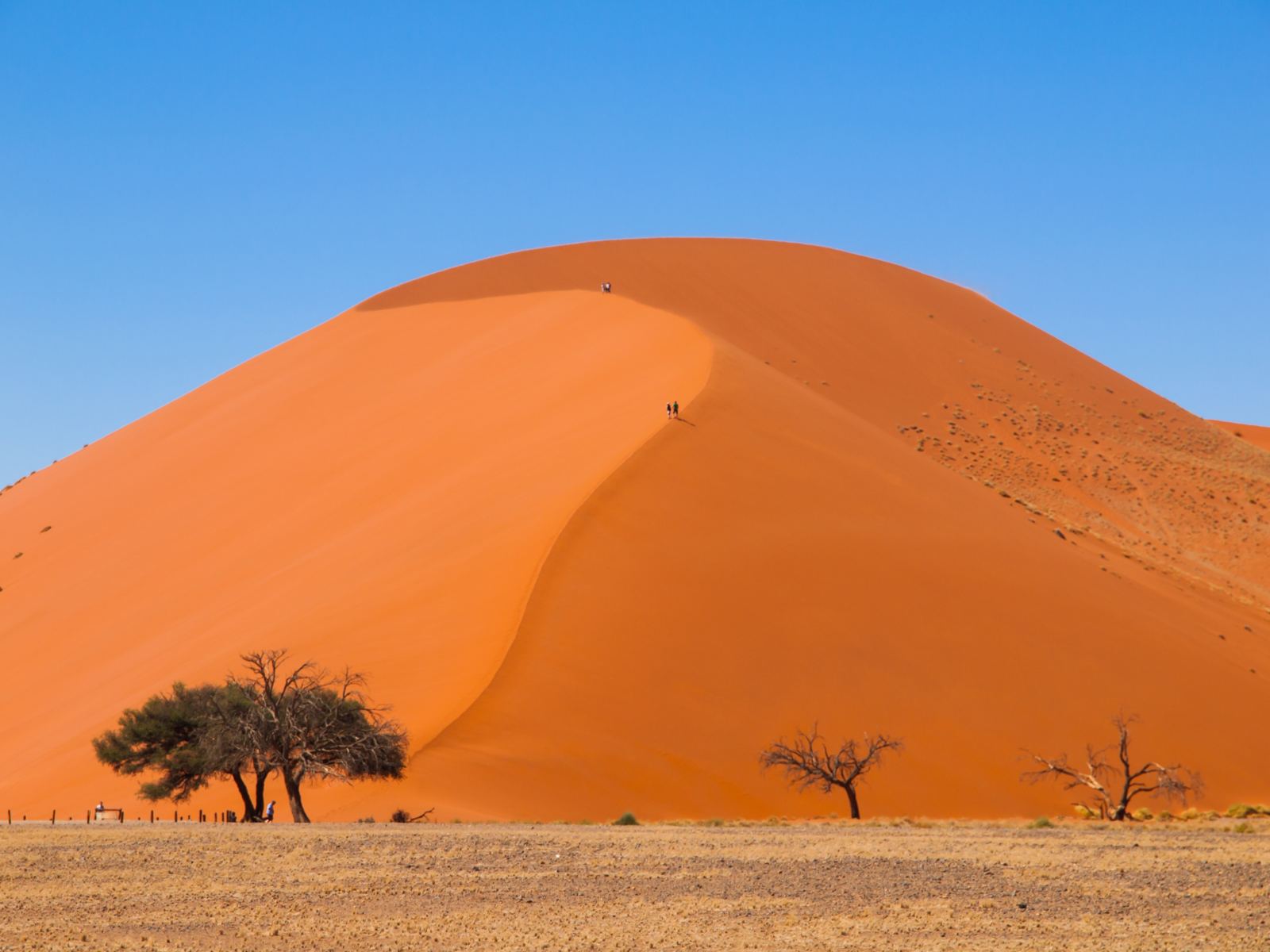
A red dune with a curved crest and two trees at its foot
Dune 45, named after the kilometre marker on the road. Twenty minutes up, and half the road is already at the top.
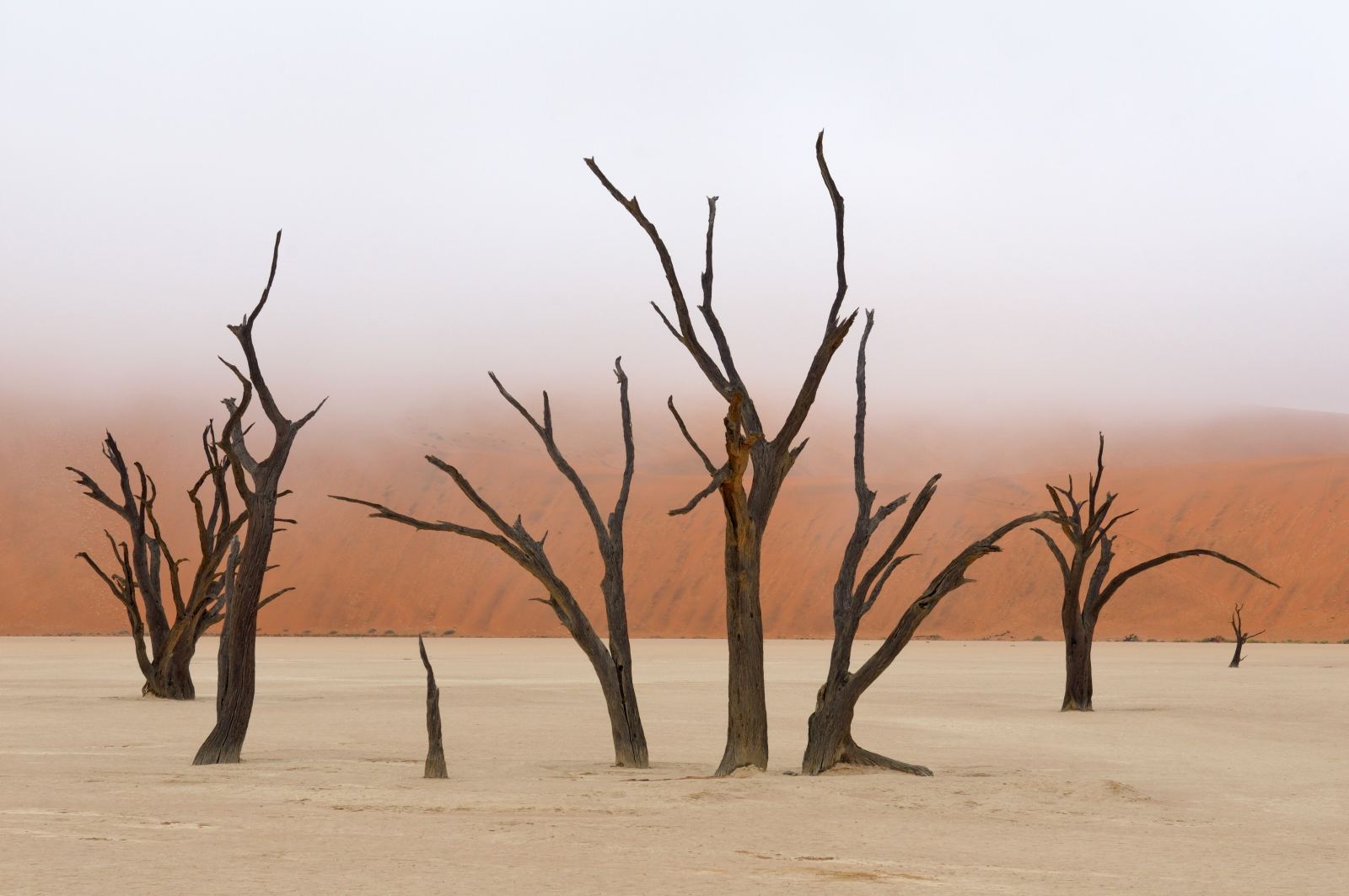
Dead trees on white clay in haze
On some mornings fog reaches this far, more than sixty kilometres in from the coast.
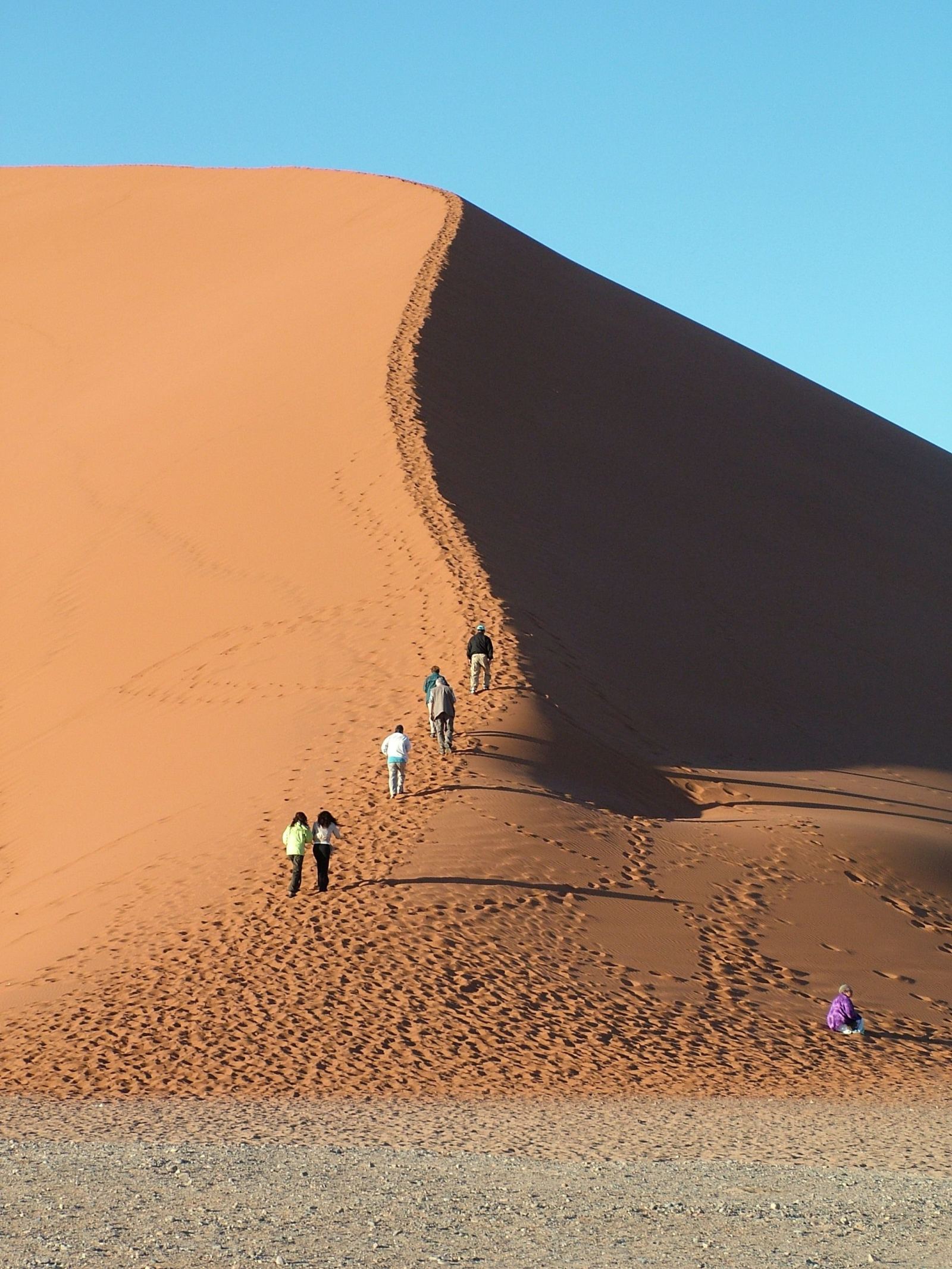
People climbing a dune crest in single file
On the crest you walk one behind the other. Step off it and the sand takes your foot with it.
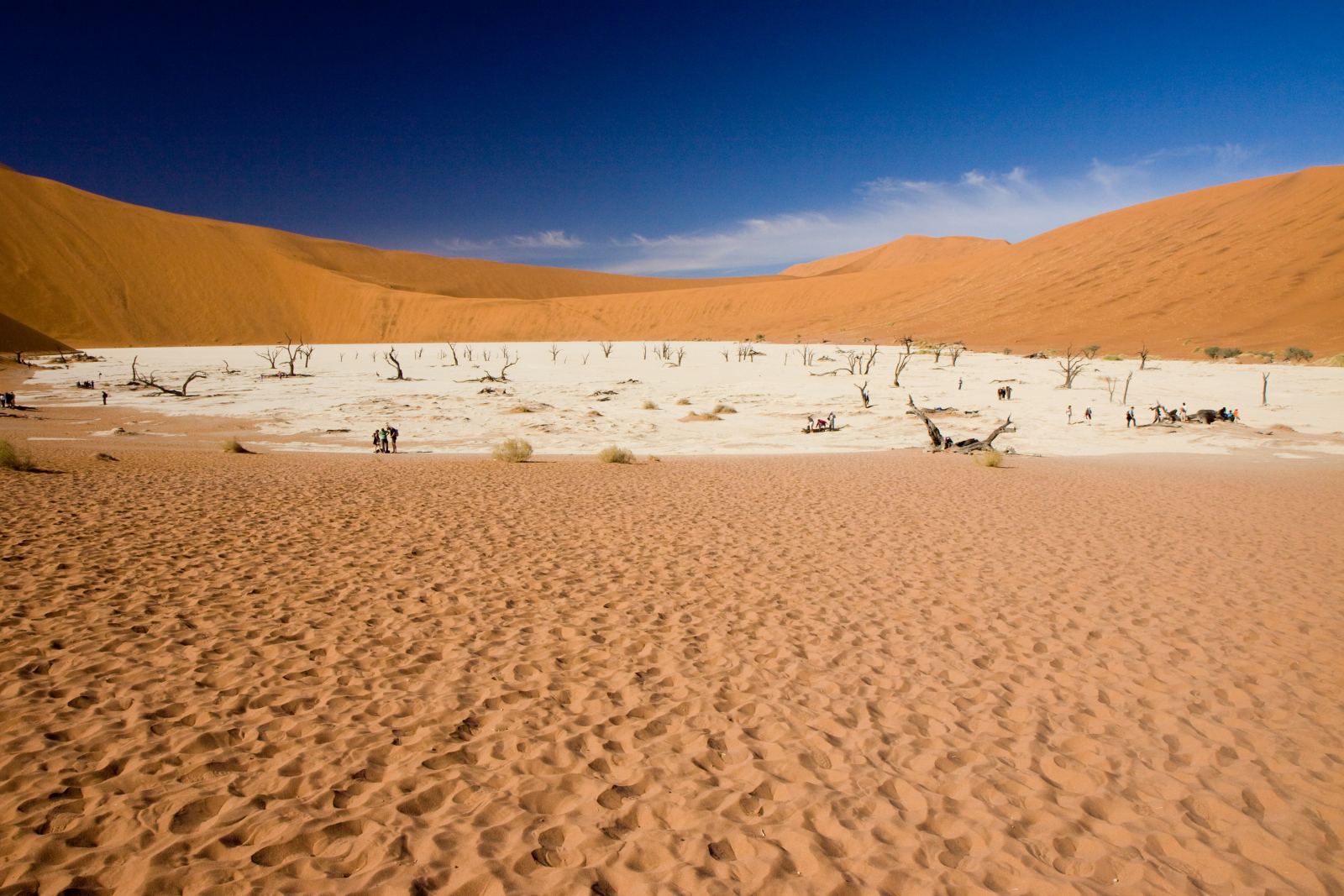
Looking down from a dune crest onto the pale pan
From up there you see how small the pan is and how high the dunes around it stand.
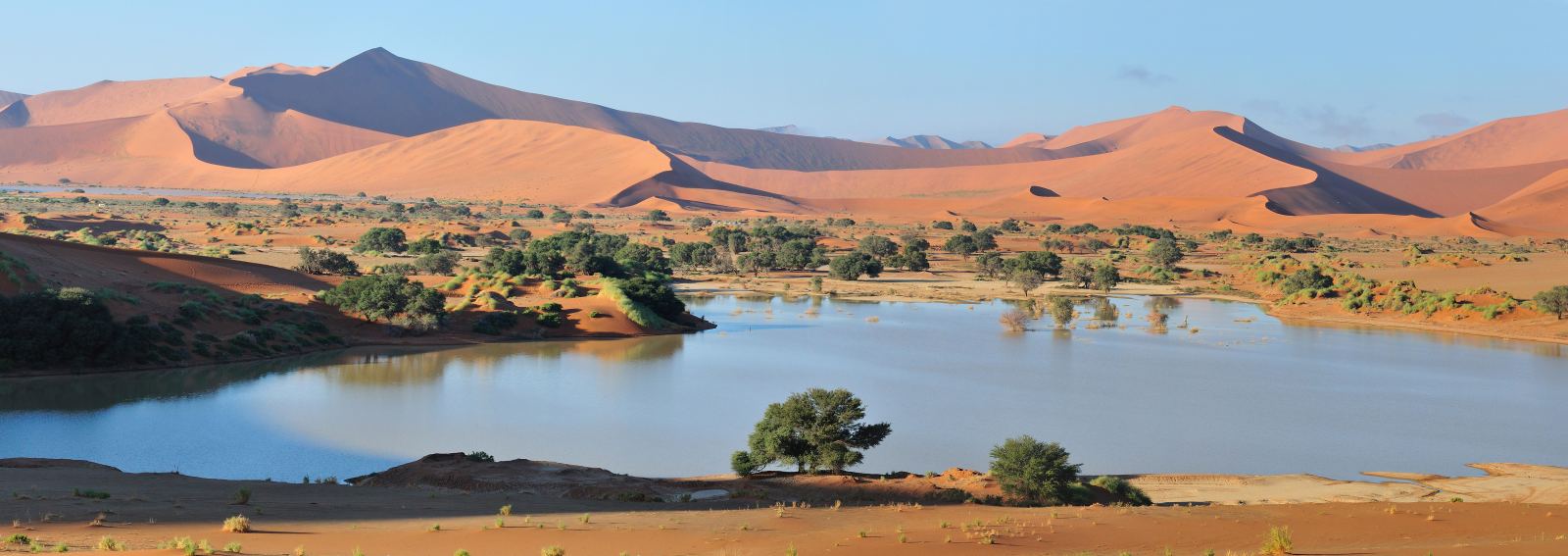
Water in the pan, green trees in front, dunes behind
The rare case: the Tsauchab made it all the way to the pan. The last time it managed that was 2022.
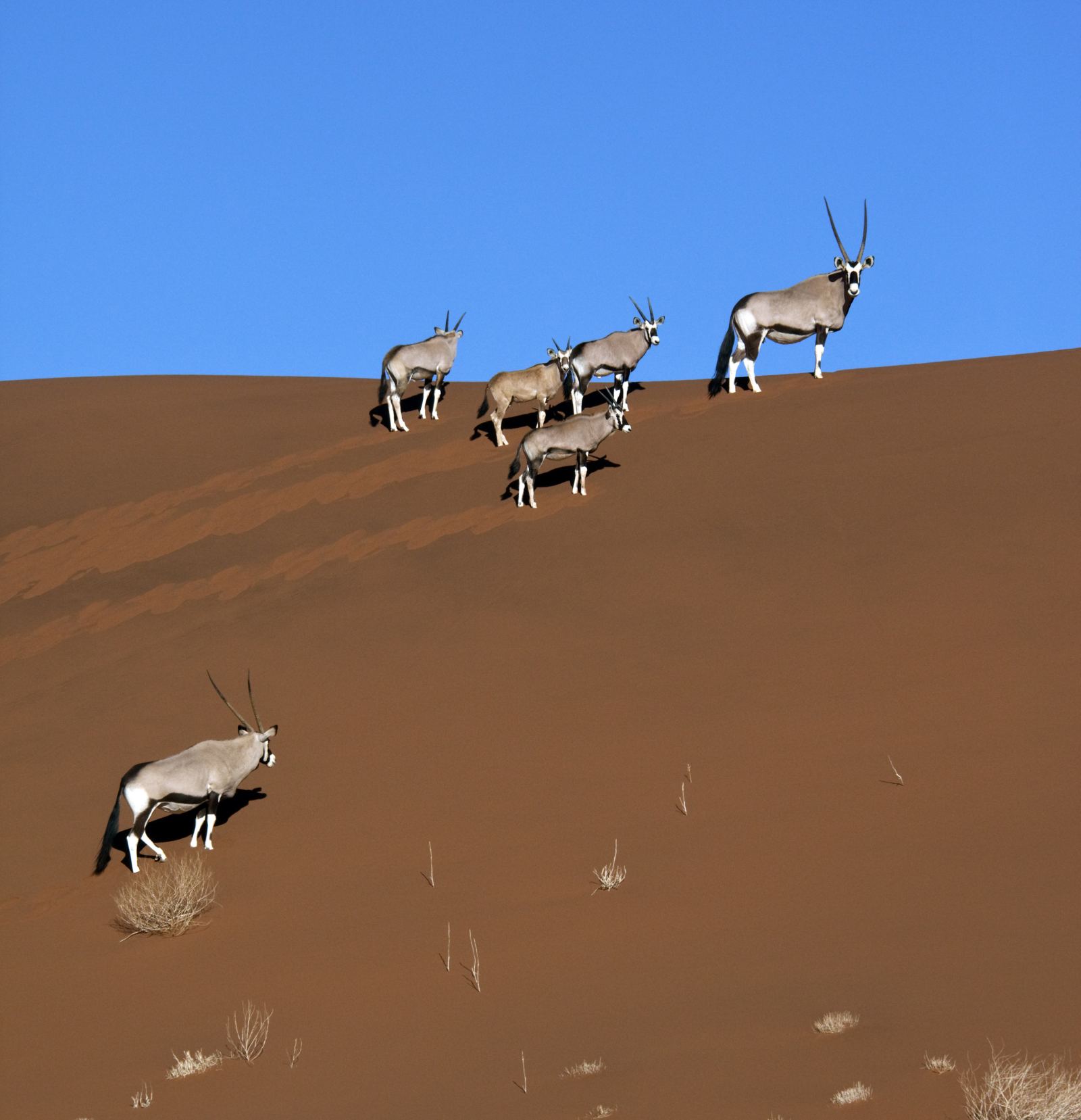
Five oryx crossing a dune slope
Oryx get by without drinking water. They stand where nothing else does.
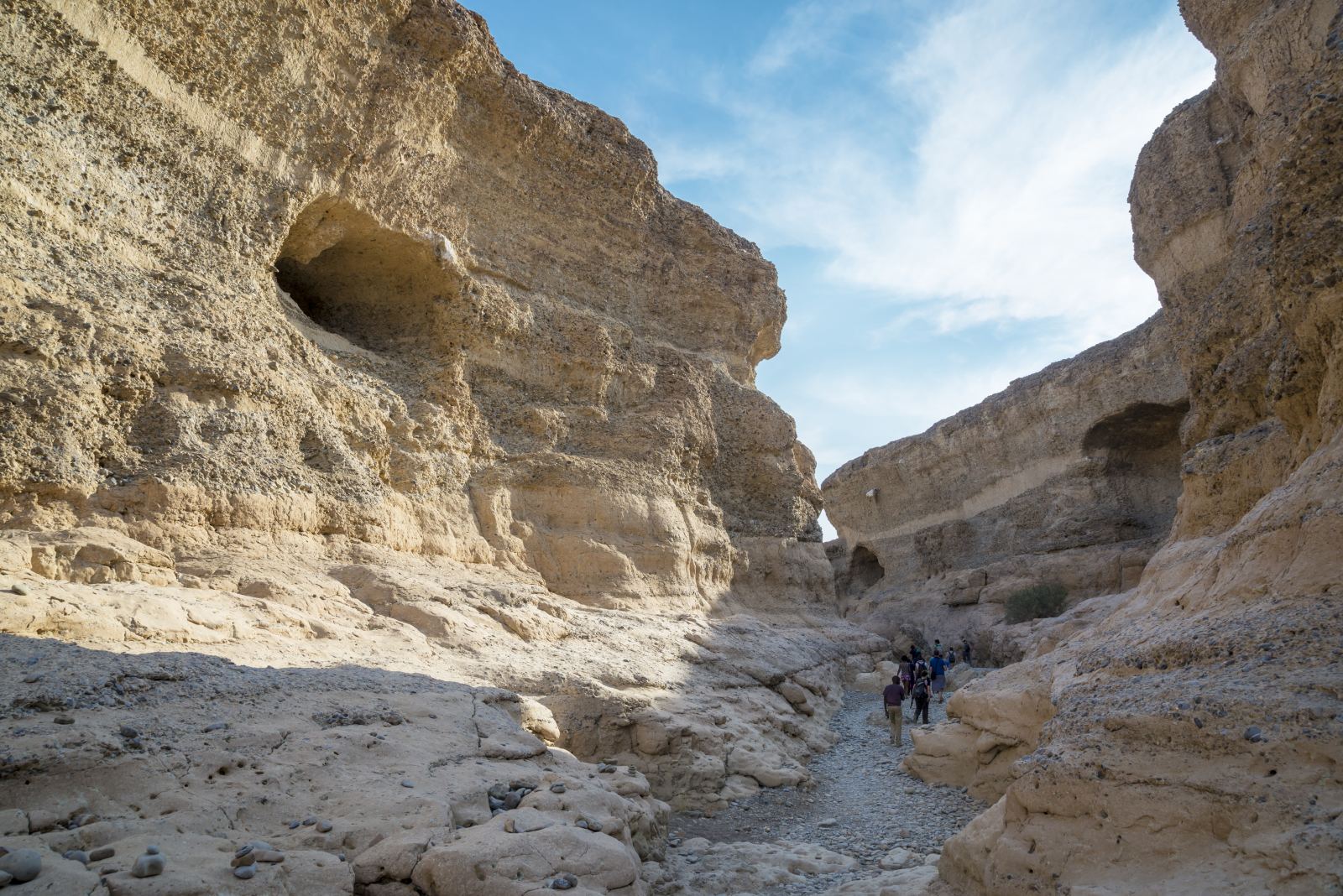
A narrow canyon of pale rock with visitors
Sesriem Canyon narrows to two metres in places. Down there it is noticeably cooler than up on the plain.
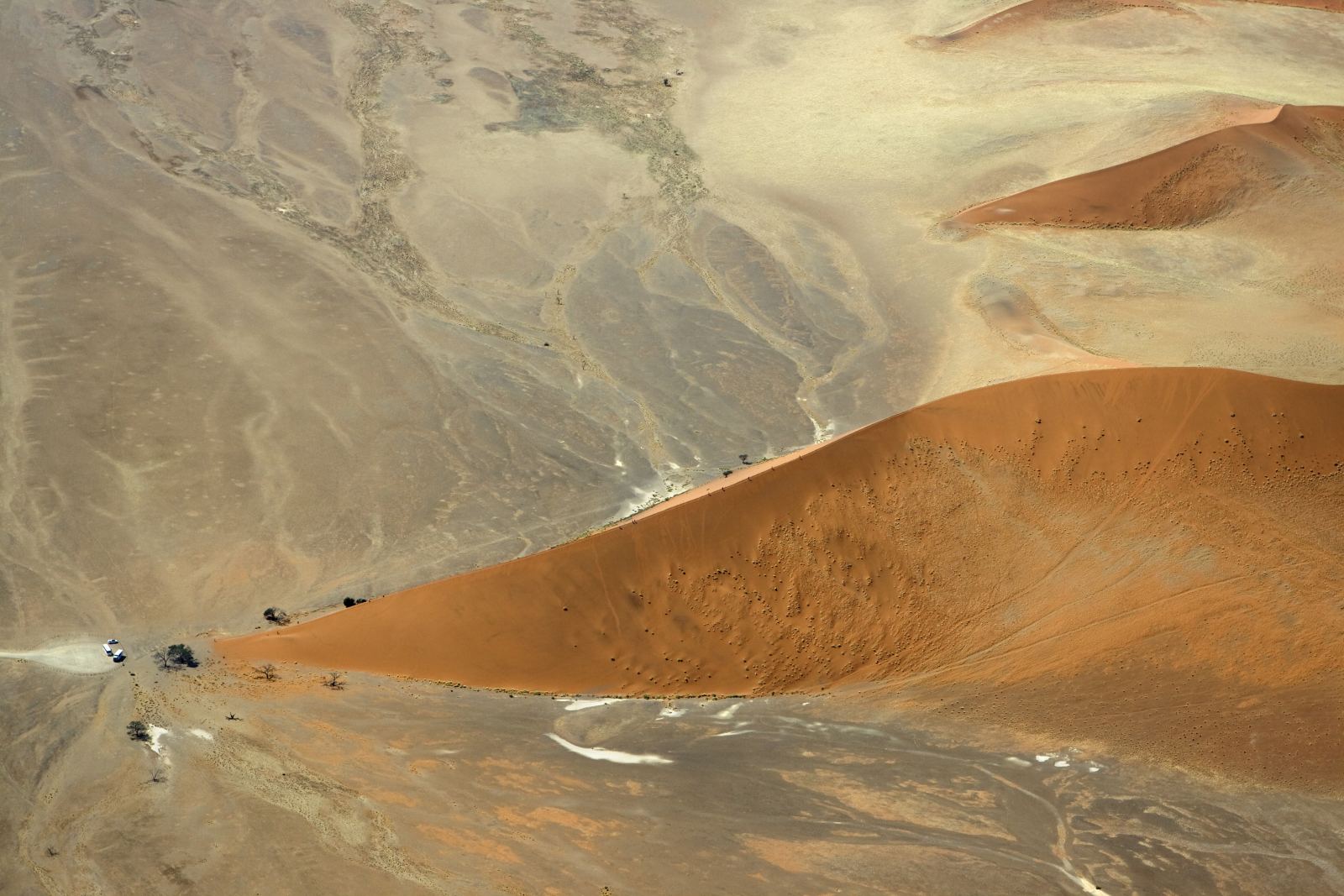
Aerial view of a crescent dune with people on the crest
From the air you see what stays hidden on the ground: how the dune ridges run north in parallel lines.
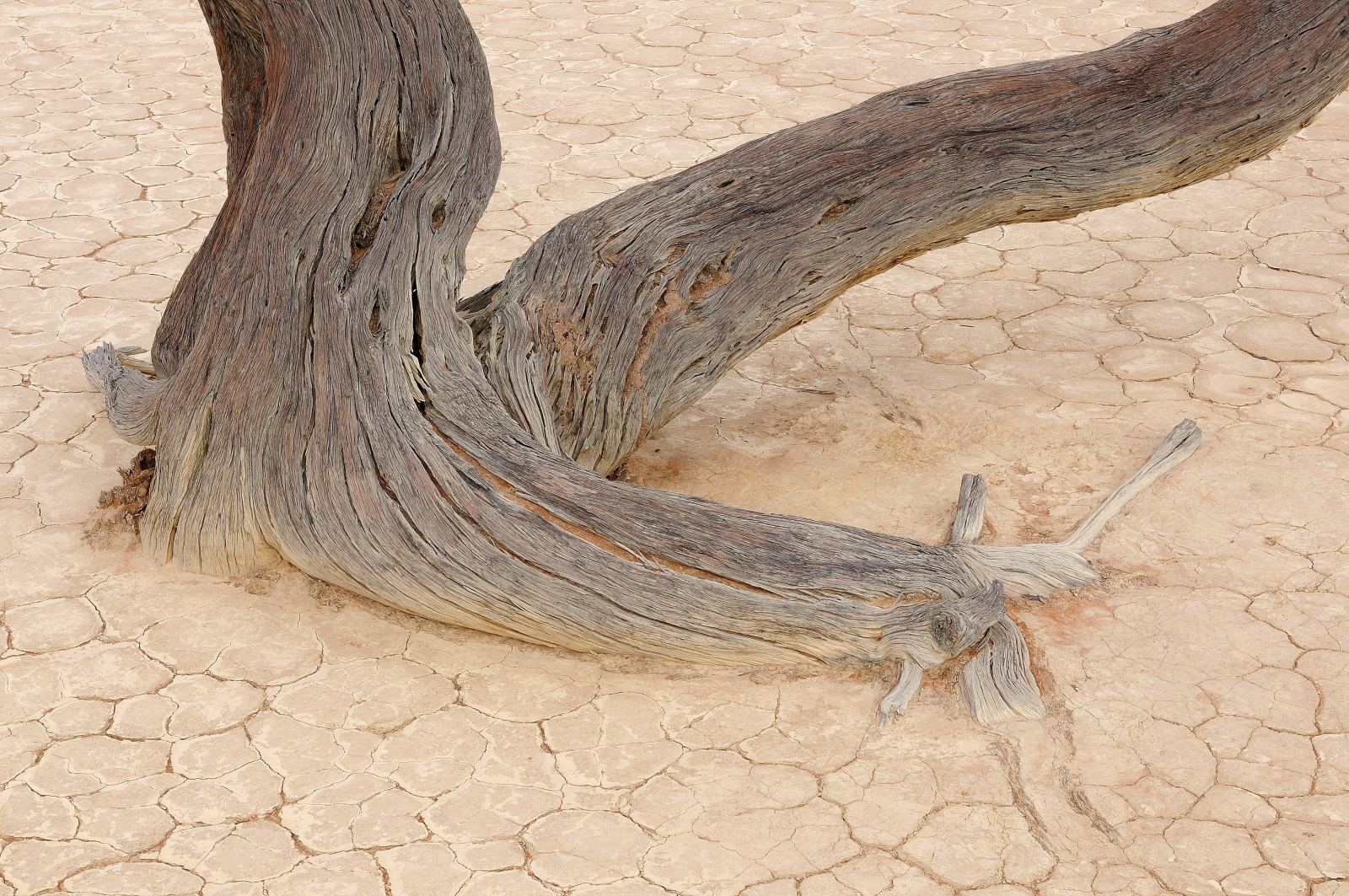
Close view of a twisted dead branch on cracked clay
The wood is several hundred years old. What is missing for it to rot away is simply moisture.
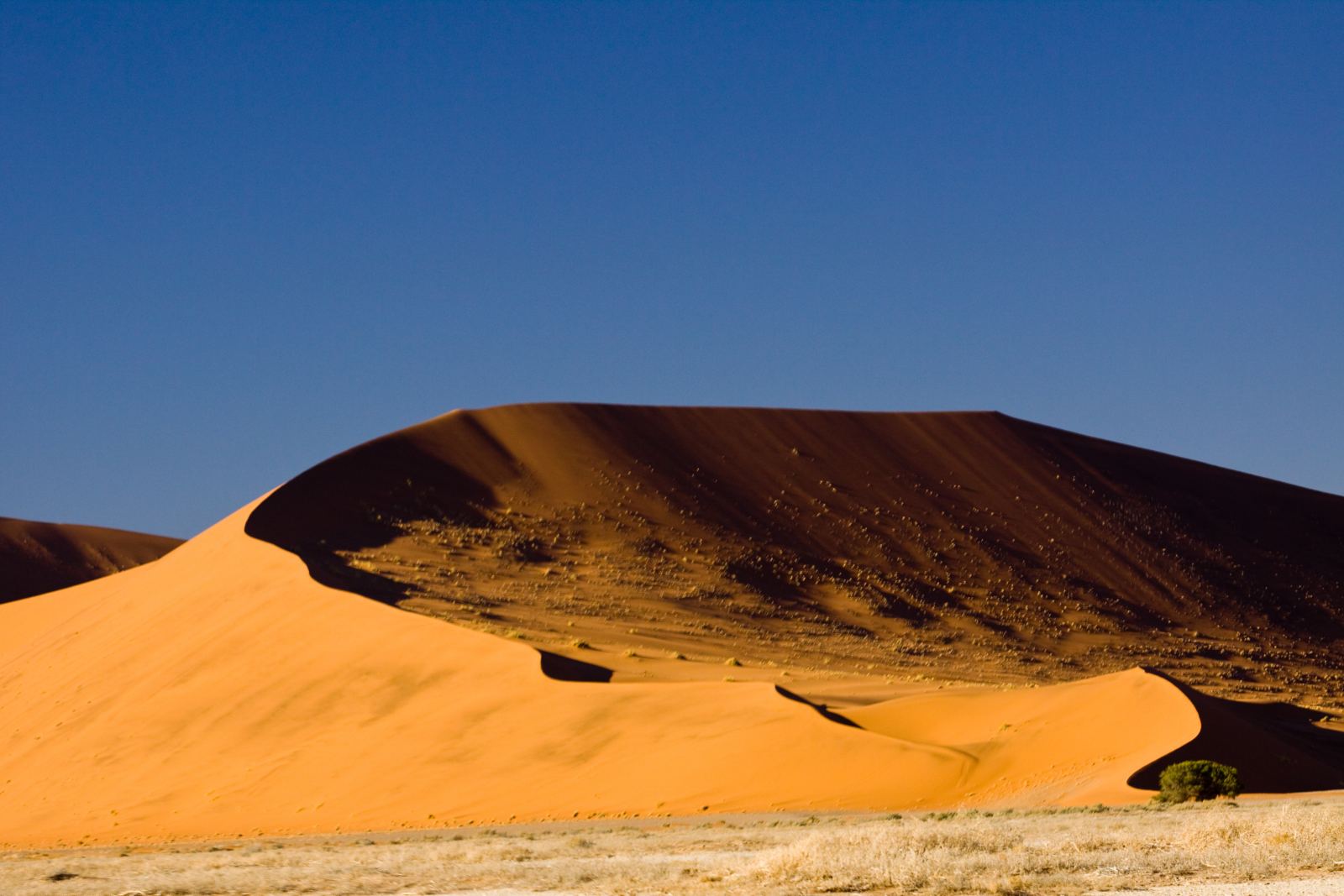
A curved dune crest against deep blue sky
By ten in the morning the colour has gone. What is left is the shape.

Questions about photographing Sossusvlei

When are the dunes at Sossusvlei at their reddest?

The dunes at Sossusvlei glow strongest in the first and last hour of the day, when low light hits the eastern face and leaves the western one in shadow. At midday the same sand looks pale and flat.

Can you fly a drone at Sossusvlei?

Flying a drone in the Namib-Naukluft Park requires permission from the Namibian civil aviation authority. Without it the flight is not allowed, which rules the drone out for most travellers.

What is there to photograph apart from the dunes?

Besides the dunes, Sossusvlei offers the dead camel thorn trees of Deadvlei, the cracked clay of the pans, the narrow Sesriem Canyon, oryx out on the plain, and at night a sky with no stray light in it.